Projects

Deer Vision

The UGA Deer Lab has studied deer visual capabilities for decades. The eyes of white-tailed deer are specialized for function in a variety of habitats and lighting conditions. Because of the wide-set placement of their eyes, the shape of their pupil, and the arrangement of cone cells in their retina, deer have an enhanced ability to monitor a broad area. The reflective structure on the back of their retina, the tapetum lucidum, improves visual sensitivity of deer in low-light conditions and improves the contrast of scenes during daylight. Deer have excellent short-wavelength color perception including blues and ultraviolet light. Their vision is well tuned to green and brown tones similar to the colors of many of the habitats deer occupy. However, because they lack long-wavelength cones, deer have less sensitivity to oranges and reds as compared to humans. As a prey species, deer must navigate complex environments on the run and identify the rapid approach of predators, and the deer visual system has the ability to sense changes in light (i.e. movement) even better than humans. We continue to improve our understanding of deer vision and work to use our findings to improve management of deer and deer-human interactions.
  1. Provide in-depth review of Cervidae (deer family) visual ecology exploring the visual systems of deer as they relate to their ecological needs, how their visual systems are specialized for particular tasks, and research needs.

  2. Characterize the spectral reflectance of white-tailed deer tapetum lucidum relative to ecological and population factors.

  3. Determine the chromatic and achromatic temporal contract sensitivity (i.e., detection of changes in the intensity of light) of deer under different lighting conditions.

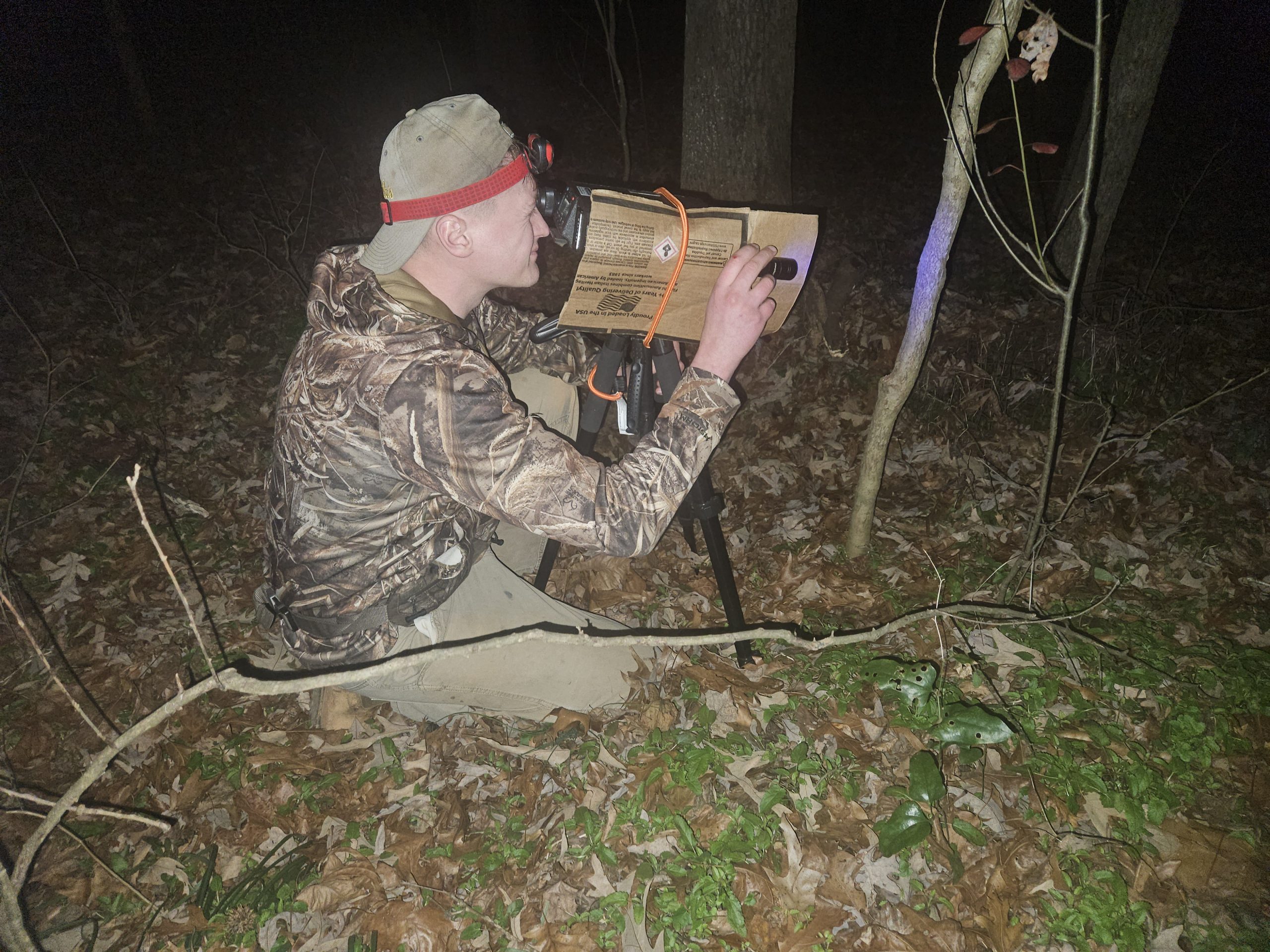
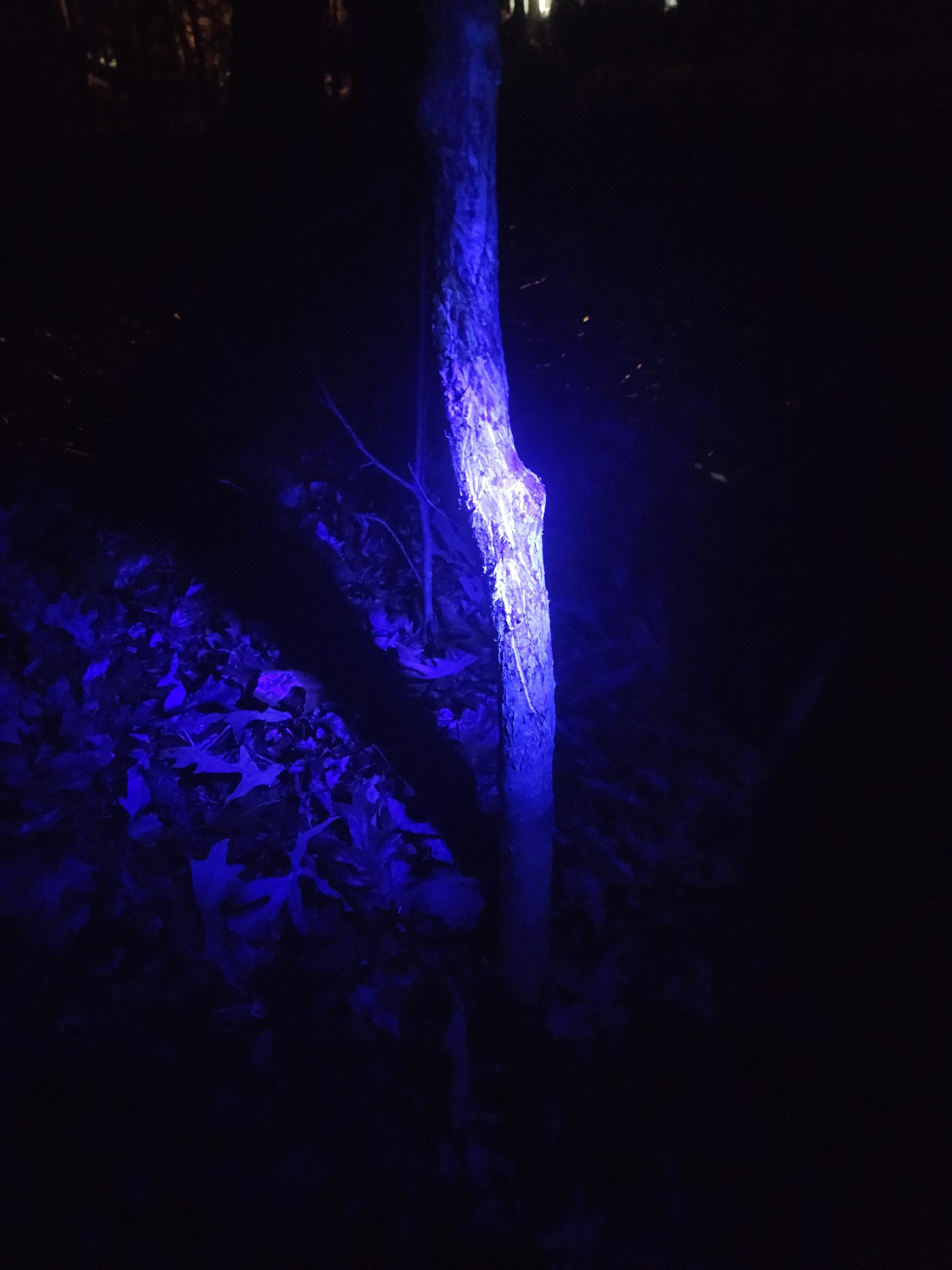
  4. Determine if anatomical features of deer and deer signposts (e.g., rubs, scrapes) photoluminesce (e.g., emit ultraviolet light).

  5. Investigate deer movements and resource selection relative to factors influencing visual perception.
  • Dr. Gino D’Angelo
  • Dr. Randy Hammond (UGA Vision Sciences Laboratory)
  • Dr. Blaise Newman
  • Dr. Karl Miller
  • Dr. Kate Myrna (UGA Veterinary Medicine)
  • Dr. Steven Castleberry
  • Daniel DeRose-Broeckert (Master’s Student)
  • Warnell School of Forestry and Natural Resources
  • UGA Deer Lab
  • SITKA Gear

Project Objectives

  1. Provide in-depth review of Cervidae (deer family) visual ecology exploring the visual systems of deer as they relate to their ecological needs, how their visual systems are specialized for particular tasks, and research needs.

  2. Characterize the spectral reflectance of white-tailed deer tapetum lucidum relative to ecological and population factors.

  3. Determine the chromatic and achromatic temporal contract sensitivity (i.e., detection of changes in the intensity of light) of deer under different lighting conditions.

  4. Determine if anatomical features of deer and deer signposts (e.g., rubs, scrapes) photoluminesce (e.g., emit ultraviolet light).

  5. Investigate deer movements and resource selection relative to factors influencing visual perception.

Researchers

  • Dr. Gino D’Angelo
  • Dr. Randy Hammond (UGA Vision Sciences Laboratory)
  • Dr. Blaise Newman
  • Dr. Karl Miller
  • Dr. Kate Myrna (UGA Veterinary Medicine)
  • Dr. Steven Castleberry
  • Daniel DeRose-Broeckert (Master’s Student)

Funding

  • Warnell School of Forestry and Natural Resources
  • UGA Deer Lab
  • SITKA Gear