Projects

Deer Movements in the Mississippi River Delta of Louisiana

In northeastern Louisiana, white-tailed deer living along the Mississippi River inhabit a unique landscape shaped by human engineering and periodic flooding. Historically, this region was dominated by bottomland hardwood forests, some of the Southeast’s most productive deer habitat. However, in the late 1800s and early 1900s, large-scale timber cuts transformed this forested, fertile floodplain to primarily agriculture. The lower Mississippi River sees annual cycles of flooding. Past extreme flooding events have periodically wreaked havoc on communities and commerce along the river. As a result, in the early 1900s, massive engineering works of extensive levee systems were constructed along the river to control flooding.  

The lands between the Mississippi River and the levee system, also known as the batture lands, are unprotected from flooding. This thin, untamed strip of land holds some of the remnant bottomland forests, forested regrowth following logging, sloughs and swamps, and other habitats suited to flooding. Over time, river channelization has increased river discharge and, along with the levee system, concentrates water that would have otherwise spread into the river’s natural floodplain, resulting in greater flooding within the batture than was historically observed.  

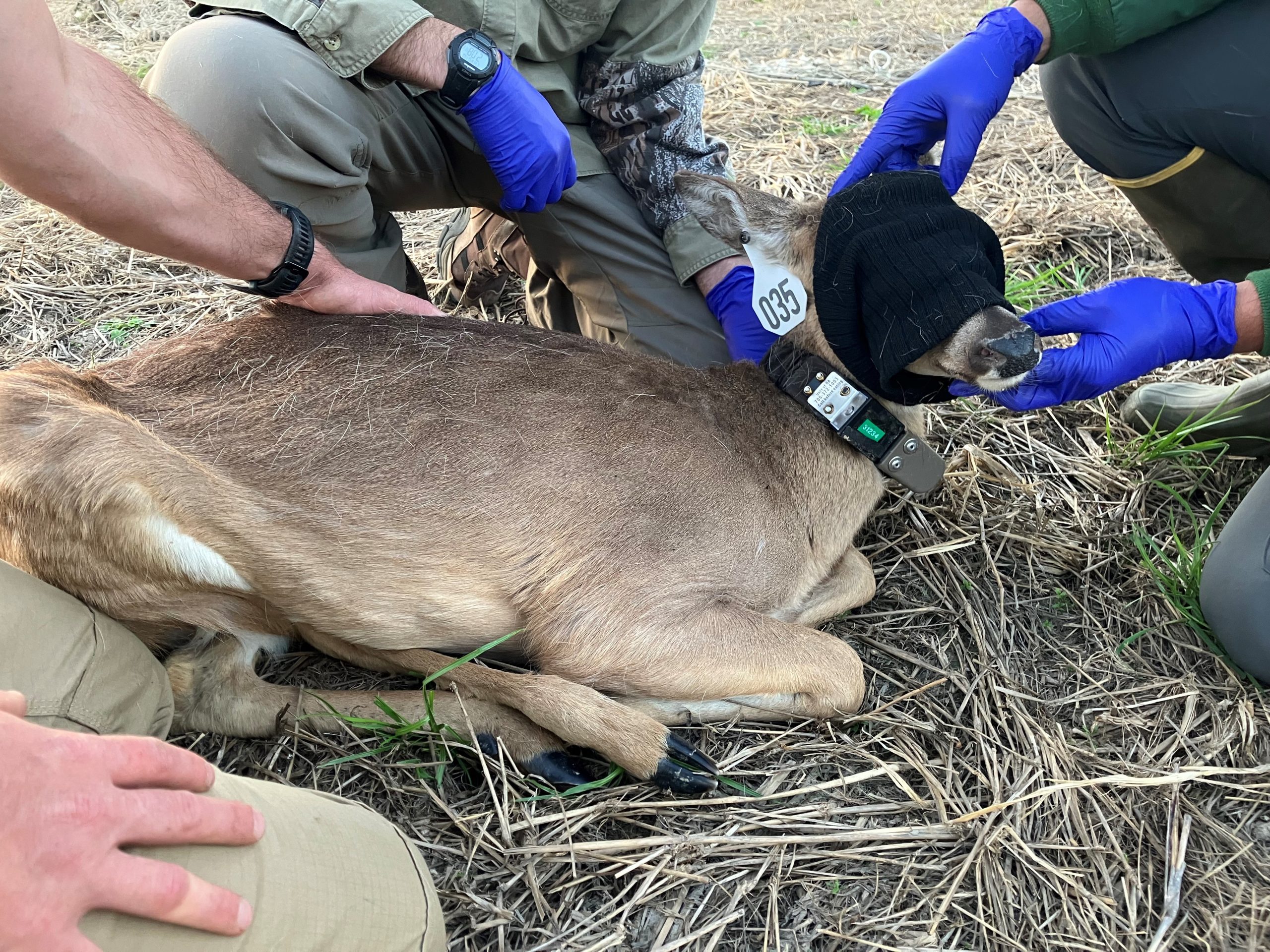
Chronic wasting disease (CWD) was first detected in Louisiana in 2022 and is one of the biggest threats to white-tailed deer across the United States. CWD is a fatal, neurodegenerative prion disease found in most deer species, with no known cure. The current Louisiana CWD Control Area is located in the northeastern portion of the state along the Mississippi River. The spread of CWD is linked to movement patterns of infected deer, and understanding deer movement behaviors is critical for management of CWD. Longer distance movements by deer, such as dispersals, may play outsized roles in transmitting CWD to new areas. A dispersal is movement from where an animal was born to its adult home range.

In the Mississippi Delta region of northeastern Louisiana:

  1. Describe basic movement ecology of white-tailed deer of all age classes, including annual and seasonal home range sizes relative to water inundation.

  2. Identify dispersal events, excursions, and atypical movements of juvenile male white-tailed deer and determine age of dispersal, dispersal distances, and dispersal directions relative to water inundation.

  3. Identify dispersal events, excursions, and atypical movements of juvenile female, adult male, and adult female white-tailed deer relative to water inundation.

  4. Describe the influences of landscape cover, flooding, and other factors on characteristics of dispersal events, excursions, and atypical movements relative to water inundation.
  • Dr. Gino D’Angelo
  • Dr. Michael Chamberlain
  • Hunter Ellsworth (PhD Student)
  • Abby Baylard (Master’s Student)
  • Johnathan Bordelon (Louisiana Department of Wildlife and Fisheries)
  • Brad Kennon (Louisiana Department of Wildlife and Fisheries)
  • Louisiana Department of Wildlife and Fisheries

Project Objectives

In the Mississippi Delta region of northeastern Louisiana:

  1. Describe basic movement ecology of white-tailed deer of all age classes, including annual and seasonal home range sizes relative to water inundation.

  2. Identify dispersal events, excursions, and atypical movements of juvenile male white-tailed deer and determine age of dispersal, dispersal distances, and dispersal directions relative to water inundation.

  3. Identify dispersal events, excursions, and atypical movements of juvenile female, adult male, and adult female white-tailed deer relative to water inundation.

  4. Describe the influences of landscape cover, flooding, and other factors on characteristics of dispersal events, excursions, and atypical movements relative to water inundation.

Researchers

  • Dr. Gino D’Angelo
  • Dr. Michael Chamberlain
  • Hunter Ellsworth (PhD Student)
  • Abby Baylard (Master’s Student)
  • Johnathan Bordelon (Louisiana Department of Wildlife and Fisheries)
  • Brad Kennon (Louisiana Department of Wildlife and Fisheries)

Funding

  • Louisiana Department of Wildlife and Fisheries