Projects

Deer Population Declines
in the North Georgia Mountains

From 1979-2015, the Georgia Department of Natural Resources documented a strongly declining trend in white-tailed deer harvest on eight wildlife management areas in the North Georgia Mountains–across hundreds of thousands of acres of public land. The declining trend in deer harvest was speculated to be caused by predation. However, specific knowledge of birth and death rates of animals, causes of death, and habitat use is critical for effective wildlife population management which necessitated our study.

The North Georgia Mountains represent a predator-rich environment with abundant populations of coyotes, black bears, and bobcats. Habitat diversity can offset predation by providing ample food for deer and predators and quality cover for deer to hide from and escape predators. However, limited timber management on national forest lands in the region in recent decades resulted in mature forests with little sunlight reaching the forest floor and a resulting absence of young forests and plant diversity to provide wildlife with food and cover.

More information was needed to fill gaps in understanding about factors affecting the stability of deer populations and potential strategies to direct future deer population management.
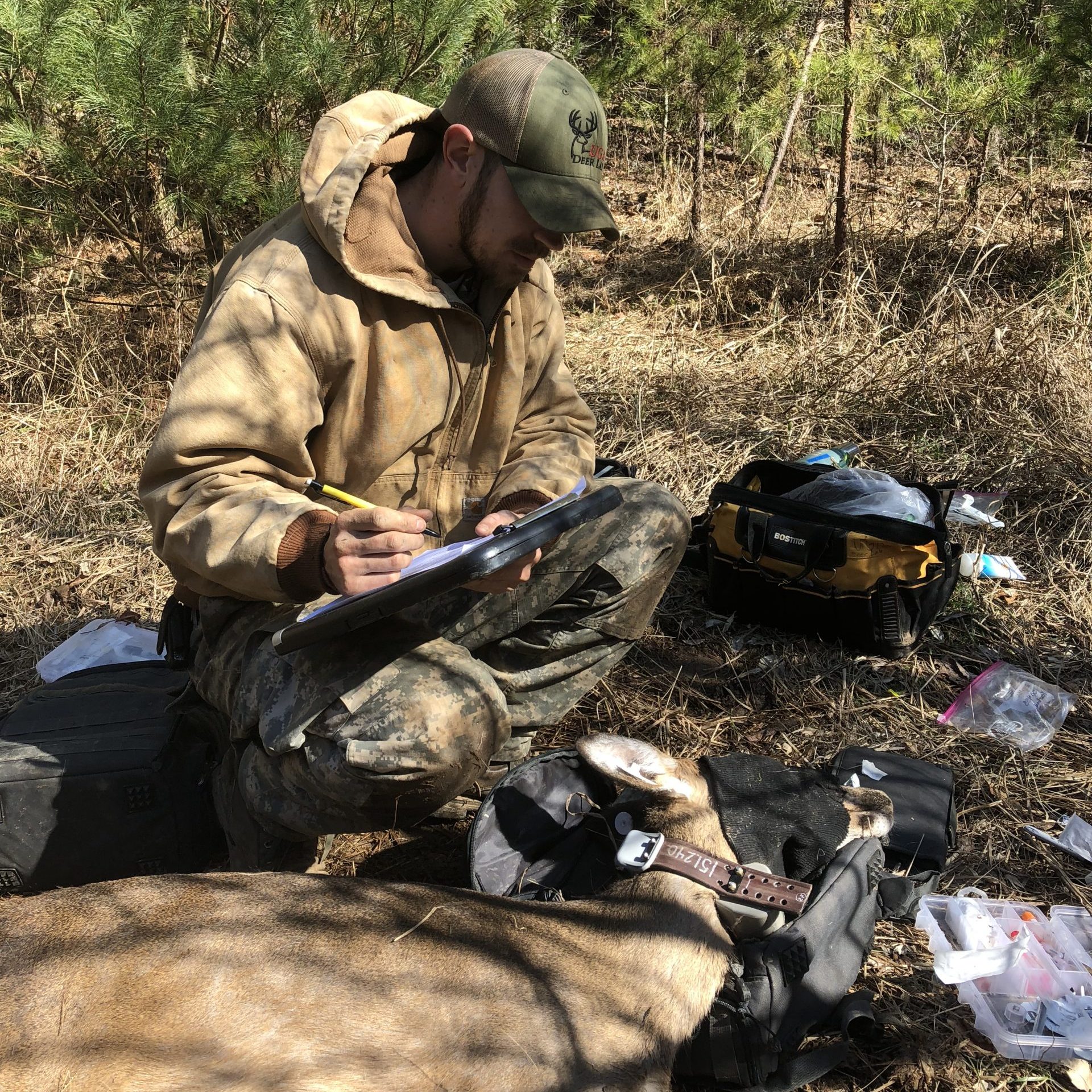
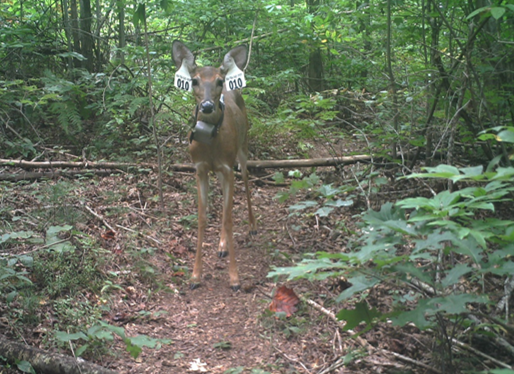
  1. Examine survival and cause-specific mortality of white-tailed deer fawns.

  2. Evaluate home range size and habitat selection of female deer and fawns.

  3. Evaluate the influence of mast production on space use patterns of female deer.

  4. Estimate future deer population trends in the region.

  5. Evaluate the influence of maternal behavior on fawn mortality risk.

  6. Determine movement characteristics of deer hunters in the North Georgia Mountains.

  7. Assess the effects of hunting pressure on the movements of female deer.

  8. Measure the satisfaction, motivations, and preferences of deer hunters on North Georgia wildlife management areas and determine how managers could increase hunter satisfaction.
  • Dr. Gino D’Angelo
  • Dr. Karl Miller
  • David Osborn
  • Dr. Adam Edge
  • Cheyenne Yates
  • Jackie Rosenberger
  • Charlie Killmaster (Georgia Department of Natural Resources)
  • Dr. Tina Johannsen (Georgia Department of Natural Resources)
  • Dr. Andrew Little (University of Nebraska-Lincoln)
  • Georgia Department of Natural Resources
  • UGA Deer Lab
  • Warnell School of Forestry and Natural Resources

Project Objectives

  1. Examine survival and cause-specific mortality of white-tailed deer fawns.

  2. Evaluate home range size and habitat selection of female deer and fawns.

  3. Evaluate the influence of mast production on space use patterns of female deer.

  4. Estimate future deer population trends in the region.

  5. Evaluate the influence of maternal behavior on fawn mortality risk.

  6. Determine movement characteristics of deer hunters in the North Georgia Mountains.

  7. Assess the effects of hunting pressure on the movements of female deer.

  8. Measure the satisfaction, motivations, and preferences of deer hunters on North Georgia wildlife management areas and determine how managers could increase hunter satisfaction.

Researchers

  • Dr. Gino D’Angelo
  • Dr. Karl Miller
  • David Osborn
  • Dr. Adam Edge
  • Cheyenne Yates
  • Jackie Rosenberger
  • Charlie Killmaster (Georgia Department of Natural Resources)
  • Dr. Tina Johannsen (Georgia Department of Natural Resources)
  • Dr. Andrew Little (University of Nebraska-Lincoln)

Funding

  • Georgia Department of Natural Resources
  • UGA Deer Lab
  • Warnell School of Forestry and Natural Resources