Investigating key questions in deer ecology, disease, movement, and human–wildlife interactions to inform effective management and conservation decisions.
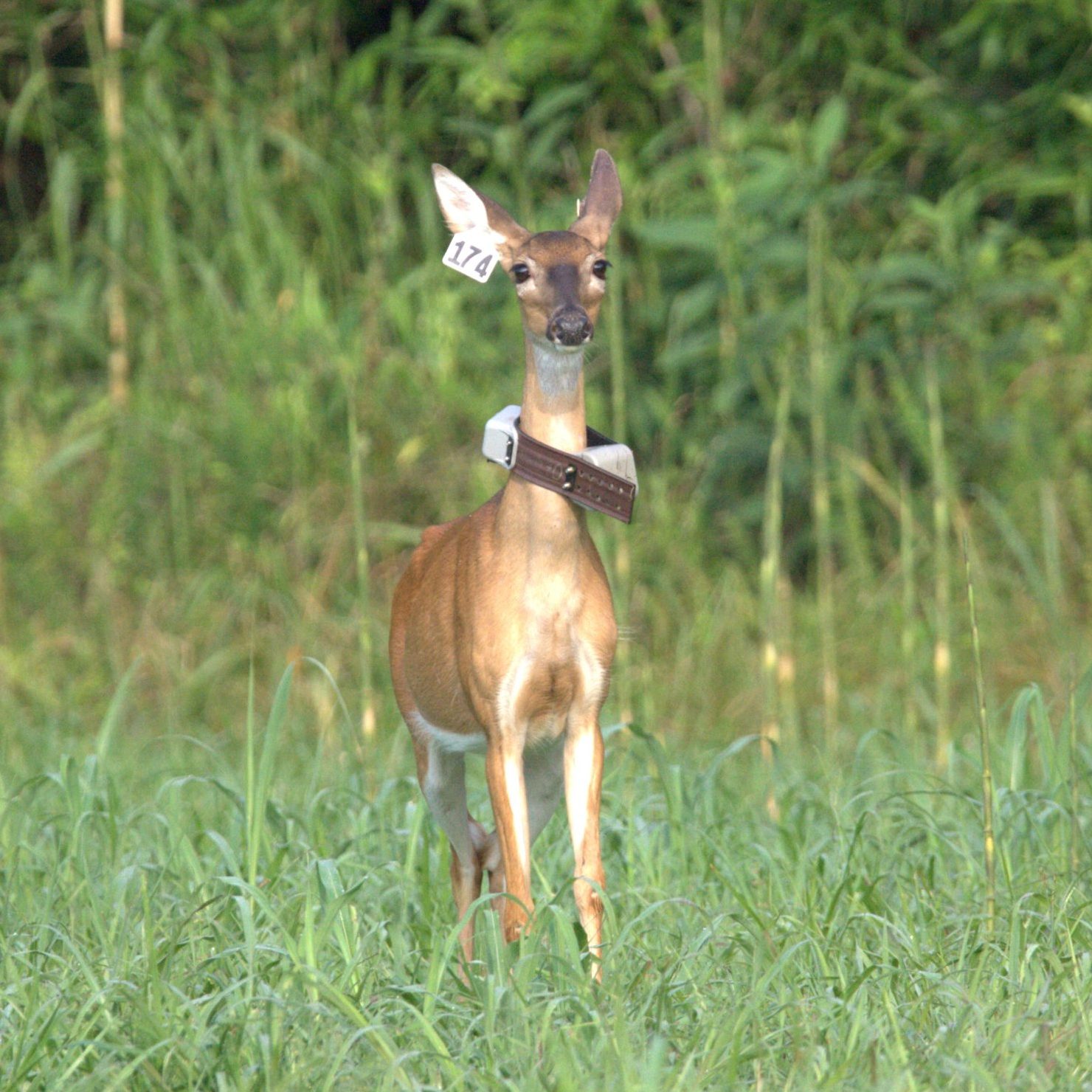
This research investigates the long-term decline of white-tailed deer in northern Georgia’s Chattahoochee National Forest. Using radio-collaring of adult females and fawns, the project quantifies vital rates such as survival and reproduction, and assesses how predation and forest structure contribute to low fawn recruitment. Published models project a continued annual population decline under current conditions, and suggest that only a combination of improved fawn survival and restricted antlerless harvest may reverse the trend.
This research program, led by UGA and supported by the Arkansas Game and Fish Commission, investigates the demographic and ecological impacts of chronic wasting disease (CWD) in white-tailed deer populations in northern Arkansas. The study integrates deer capture, radio-collaring of adults and fawns, comprehensive sampling (biological tissues and camera data), and spatial modeling to quantify survival, infection prevalence, and transmission dynamics. Preliminary data show a significant mortality burden from CWD, and the team is developing spatially explicit population models to assess potential management strategies and forecast long-term changes in deer abundance.
This project focuses on understanding and managing the emergence of chronic wasting disease (CWD) in Louisiana’s white-tailed deer population. Following the state’s first confirmed case in 2022, researchers are working with the Louisiana Department of Wildlife and Fisheries to evaluate disease prevalence, assess spatial patterns of CWD risk, and support ongoing surveillance efforts. Combining diagnostic testing, field monitoring, and data-driven evaluation of management actions, the work aims to clarify how CWD is spreading within the region and to inform strategies that protect long-term deer health and population stability.
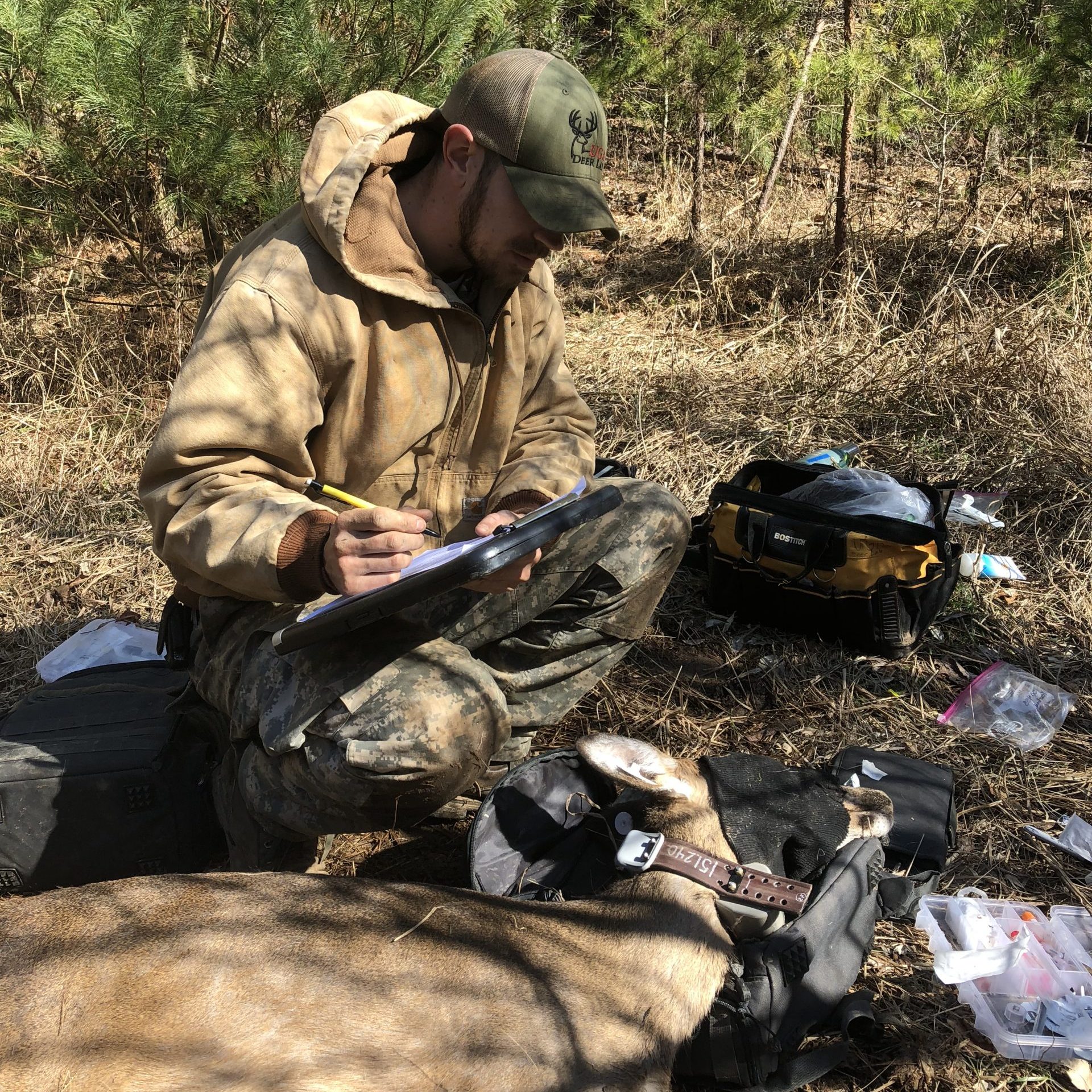
This project highlights short-term and seasonal research conducted by the UGA Deer Lab under temporary staffing frameworks. These projects often involve part-time and temporary research technicians, who support tasks such as fawn capture and collaring, camera-trap monitoring, sample collection, and herd husbandry. Such roles enable rapid-response studies and field-intensive data collection while building capacity within the lab and training emerging wildlife scientists.
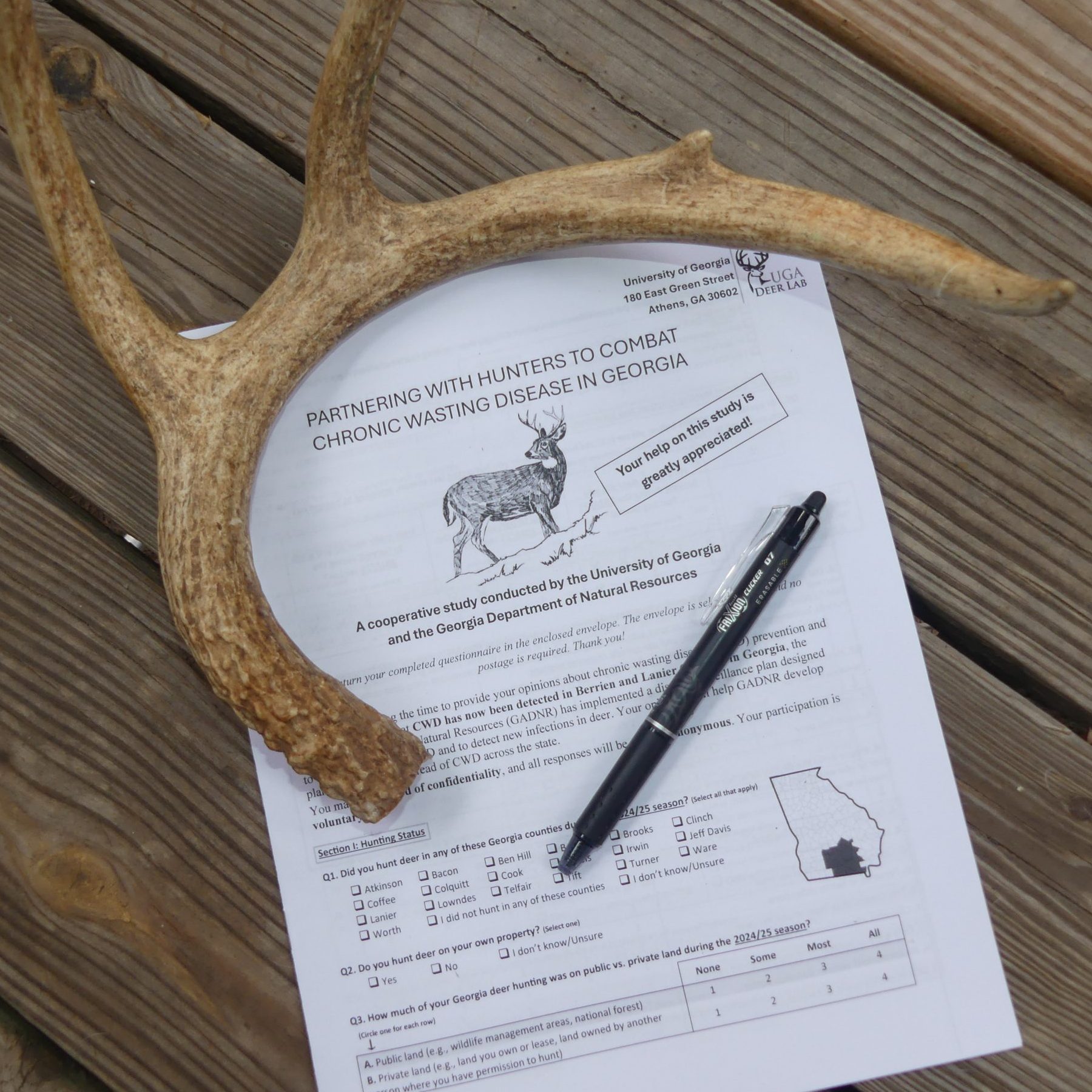
This research explores the social perceptions, attitudes, and behaviors of stakeholders—including landowners, hunters, deer processors, and taxidermists—related to deer management and chronic wasting disease (CWD). By employing survey methods, discrete choice modeling, and stakeholder engagement, the UGA Deer Lab aims to identify support and resistance for management strategies, assess educational needs, and evaluate willingness to participate in disease-monitoring efforts. The insights generated inform effective communication initiatives and policy design to align CWD mitigation measures with the values and motivations of diverse stakeholder groups.
This project investigates coyote population dynamics in the southeastern U.S. and their influence on white-tailed deer ecology. Through GPS collaring, camera surveys, acoustic monitoring, and genetic sampling, researchers estimate coyote abundance, movements, and diet across multiple states. Long-term data show that coyote populations often rebound quickly after removal efforts, indicating that lethal control alone is costly and largely ineffective. The study provides science-based insights to guide adaptive management by integrating predator ecology with deer survival and recruitment patterns.
This project supports tailored, investigator-driven studies within the UGA Deer Lab, allowing researchers to design and implement bespoke experiments that address specific ecological, behavioral, or management questions. By accommodating a range of methodologies—from field telemetry to captive trials—these customized projects provide flexibility to explore novel hypotheses, pilot new techniques, and respond to emerging wildlife‐management needs. The resulting data help drive innovation in deer research and foster collaboration across disciplines and institutions.
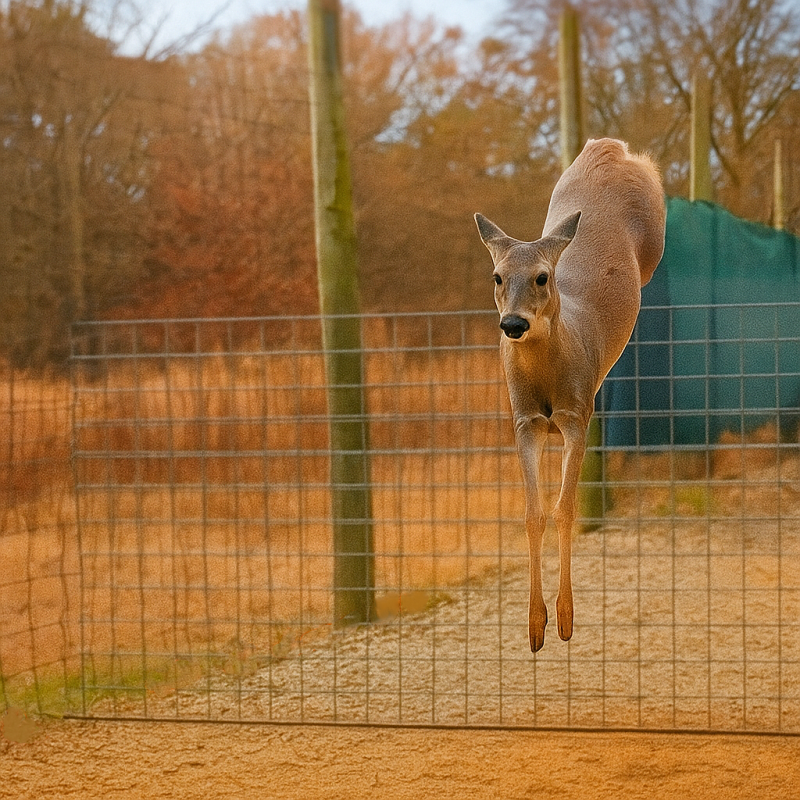
This research evaluates how different fence designs affect deer movement and safety in suburban and residential environments. Using captive deer in controlled jumping trials, the study tests fence height, material opacity, and out-rigged structures to assess which configurations minimize deer-fence conflicts and entanglement. Data from these experiments, combined with surveys of homeowners, guide recommendations for fence modifications that balance efficacy, cost, aesthetics, and wildlife welfare.
This research investigates the visual physiology and perception of white-tailed deer, focusing on how their eyes process light, color, and contrast in ecological contexts. By combining behavioral trials, spectral measurements, and retinal physiology studies, the UGA Deer Lab explores how deer perceive ultraviolet light, their limited color range, and how these visual traits influence their movement, foraging, and responses to environmental stimuli. Insights from this work help explain deer behavior in low-light settings, inform the design of collision mitigation tools, and improve our understanding of how deer navigate and communicate visually.
This study examines how private landowners perceive and experience deer-related issues—such as crop damage, deer density, liability, and hunting access—and how these experiences influence their management decisions. Through surveys and stakeholder interviews, the UGA Deer Lab identifies landowner motivations, barriers to participation in deer management programs, and attitudes toward proposed policies. The findings help inform science-based, socially acceptable management strategies by aligning ecological objectives with landowner values, education needs, and behavioral constraints.